
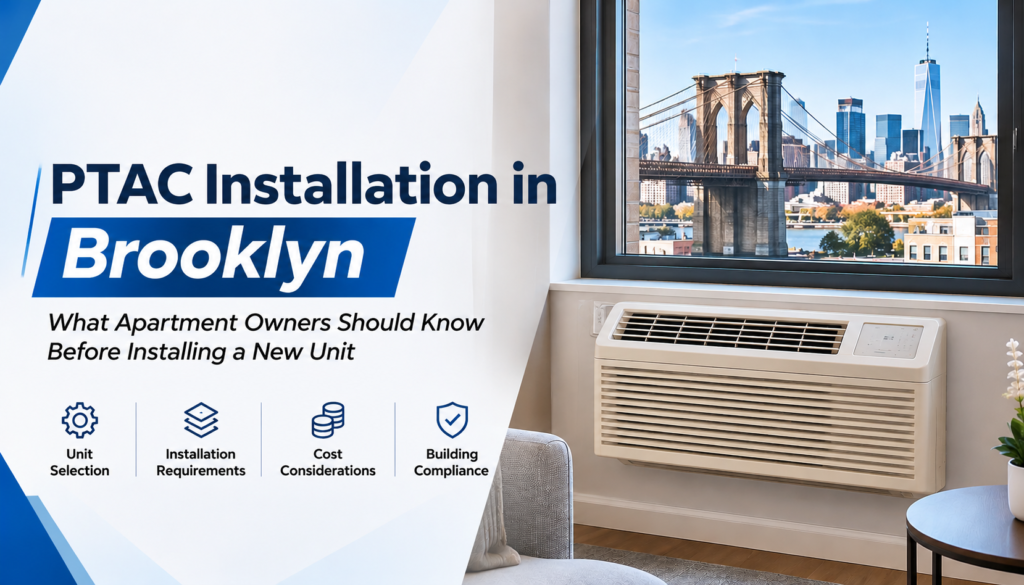
PTAC installation in Brooklyn sounds simple: slide a unit into a wall sleeve, plug it in, and enjoy instant comfort. In reality, apartment owners deal with board approvals, electrical limits, and façade rules that change from one building to the next. Checking these details first saves money, time, and neighbor complaints.
This guide explains what to confirm before PTAC installation in NYC apartments, how to size and power a new unit, and what the job costs. If you want an expert to handle the work, our team at Flow HVAC NYC installs PTAC units across Brooklyn and the other boroughs.
What Is a PTAC Unit, and Why Do Brooklyn Apartments Use Them?
A packaged terminal air conditioner (PTAC) is a self-contained heating and cooling unit that sits inside a wall sleeve. It needs no ductwork, which is why it suits prewar walk-ups, converted lofts, and mid-rise condos across Brooklyn. Each unit conditions one room or apartment zone, so you only pay to heat and cool the space you actually use.
For owners, the appeal is practical. PTACs cost less to install than central systems, they are easy to replace, and they are simple to service. Brooklyn’s mix of brownstones, co-ops, and new condos means no single setup fits every building. PTACs also give residents individual temperature control, which matters in older buildings where shared steam heat swings between too hot and too cold.
Signs Your Apartment Needs a New PTAC
Age is the first clue. Most units last about 7 to 10 years, so a PTAC older than that is living on borrowed time. Rising electric bills, weak airflow, and rooms that never reach the set temperature also signal declining performance.
Noise and leaks are the other warning signs. Rattling fans, ice on the coils, or water dripping inside the wall often point to failing parts or a blocked drain. If repair costs approach half the price of a new unit, replacement usually makes more sense.
PTAC vs. Other Cooling Options for Brooklyn Apartments
Window units are cheap, but many buildings ban them, and they block light and weaken security. Central air gives even comfort, yet it needs ductwork that most older Brooklyn buildings simply do not have. A PTAC avoids both problems while delivering cooling and heat from a single unit.
Ductless mini splits are quieter and more efficient, but they need an indoor head, an outdoor condenser, and often board approval for the line set. For most apartment owners with an existing sleeve, a PTAC is the faster and lower-cost route.
Check Building Rules Before You Buy
Start with your co-op board, condo association, or landlord. Many Brooklyn buildings require written approval and an alteration agreement before you change any wall equipment. Some boards also limit unit colors, grille styles, or noise levels, so ask for the rules in writing.
Next, consider the exterior. Buildings in landmark districts, such as Brooklyn Heights or Park Slope, may face limits on visible through-wall equipment. Taller buildings with façade inspection programs may also restrict new wall openings. Confirm the requirements with management, and ask your installer whether any Department of Buildings filing applies to your project.
Confirm Your Wall Sleeve and Opening
Most PTACs fit a standard sleeve of about 42 by 16 inches. If your opening matches, a replacement is quick and clean. If the sleeve is rusted, undersized, or missing, the installer must replace it or build a new opening, which adds time and cost.
Inspect the sleeve for gaps, rust, and a slight outward slope that drains condensation. A damaged sleeve lets in cold air, moisture, and pests. Replacing an old unit is the best moment to fix it.
Size the Unit for Your Apartment
Bigger is not better. An oversized PTAC cools the room fast, shuts off early, and leaves the air humid and clammy. An undersized one runs constantly and wears out sooner. Most units come in 7,000, 9,000, 12,000, and 15,000 BTU capacities.
A qualified installer sizes the unit using square footage, ceiling height, window exposure, insulation, and the number of occupants. A sunny top-floor Williamsburg studio needs more capacity than a shaded garden-level room of the same size.
Check Your Electrical Capacity
PTACs run on 208/230-volt or 265-volt circuits, and the plug type depends on the amperage. Your outlet must match the new unit. Swapping a 15-amp unit for a 20- or 30-amp model usually means a new circuit and receptacle, and a licensed electrician should handle that work.
Also check your panel. A shared or overloaded circuit trips breakers during heat waves. Confirm the available capacity before you order equipment, not after it arrives.
Heat Pump or Electric Resistance Heat?
Electric resistance PTACs cost less upfront but use more power in winter. Heat pump PTACs deliver heat more efficiently in mild weather, then switch to backup electric heat when temperatures drop. For many Brooklyn apartments, that balance lowers monthly bills. Explore heat pump options if efficiency is a priority.
If you want quieter operation and no wall sleeve, a ductless mini split is a strong alternative. It costs more to install, but it avoids the wall opening altogether.
Energy Efficiency Tips for Apartment Owners
Compare the energy efficiency ratio (EER) when you shop, since a higher number means lower cooling costs. A programmable thermostat also helps by reducing runtime while you are at work. In winter, seal gaps around the sleeve and add weatherstripping to stop drafts.
Efficient equipment pays off in Brooklyn’s humid summers and cold winters. A well-installed unit keeps your bills predictable and your residents comfortable.
What Does PTAC Installation in Brooklyn Cost?
PTAC projects typically start around $2,000, and the final price depends on several factors. Unit brand and capacity matter, as do electrical upgrades, sleeve replacement, and building access rules. Buildings without elevators or with strict delivery windows can add labor time.
Ask for an itemized quote that separates equipment, labor, electrical work, and disposal of the old unit. Also ask about utility incentives, since programs from Con Edison and PSEG may reduce the cost of efficient equipment. Brand choice shapes the budget too, so compare options such as American Standard and LG before you commit. Getting two or three quotes helps you spot unusually low bids that skip electrical or sleeve work.
What Happens on Installation Day
A professional install follows a clear sequence. First, the technician protects your floors and removes the old unit. Next, they inspect the sleeve, repair it if needed, and seal any gaps. Then they set the new chassis, connect power, and test cooling, heating, fan speeds, and condensate drainage.
Most replacements take a few hours, while new openings or electrical upgrades take longer. Plan access with your super or doorman in advance. Clear the area around the unit, and be available to approve the finished work.
How to Choose a PTAC Installer in NYC
Look for a licensed, insured company with proven experience in multifamily buildings. Many co-ops and condos require a certificate of insurance before work begins, so ask for it up front. Check reviews, request references, and confirm the quote includes warranty terms.
Local knowledge counts too. An installer who works in Brooklyn understands building access rules, parking limits, and board expectations. We offer new installation and replacement service with upfront pricing, and you can contact us for a quote.
Questions to Ask Your Installer Before Signing
Ask who will perform the work, and whether the technicians are employees or subcontractors. Confirm that the company carries liability insurance and can provide a certificate for your building. Request the warranty terms for both the unit and the labor in writing.
Then ask how they handle old-unit disposal, wall repairs, and any building paperwork. A reliable installer answers clearly, explains the timeline, and puts the scope of work in an itemized proposal before any deposit changes hands.
Common PTAC Installation Mistakes to Avoid
Owners often buy the unit first and ask questions later. That leads to the wrong plug type, a unit that does not fit the sleeve, or a board that refuses the work. Verify approvals, dimensions, and voltage before you order.
Another frequent mistake is choosing on price alone. A cheap unit with a weak fan can be noisy, and poor sealing wastes energy all year. Weigh efficiency ratings, sound levels, and installer quality together.
Maintenance Tips That Extend Unit Life
Clean or replace the filter every month during heavy use. Keep the outdoor grille clear of debris, and wipe the coils each season. Check that the condensate drain flows freely, since clogs cause leaks and mold.
A scheduled maintenance plan catches small problems before a summer breakdown. If a unit fails during a heat wave, our emergency HVAC repair service is available around the clock.
PTAC Installation FAQs
How long does PTAC installation take in a Brooklyn apartment?
A standard replacement usually takes two to four hours. New sleeves or electrical changes can extend the job to a full day.
Do I need permission to install a PTAC in my apartment?
In most co-ops, condos, and rentals, yes. Get written approval from your board or landlord before you order equipment.
Can I install a PTAC myself?
We advise against it. Improper sealing, wiring, or drainage can void warranties and create safety and compliance problems.4
What size PTAC do I need for my apartment?
It depends on square footage, window exposure, and insulation. A small studio often needs 7,000 to 9,000 BTU, while larger rooms may need 12,000 BTU or more, so ask for a load assessment.
Can a PTAC heat my apartment in winter?
Yes. Electric resistance models heat reliably in any weather, while heat pump models switch to backup electric heat when it gets very cold.
How long does a PTAC unit last?
With regular care, most units last about 7 to 10 years, depending on usage and maintenance.
Conclusion
PTAC installation in Brooklyn goes smoothly when you confirm approvals, sleeve condition, sizing, and electrical capacity first. Request an itemized quote and hire a licensed local installer. Ready to start? Get a PTAC installation quote from Flow HVAC NYC today.